
Get that chile to my plate!
Every fall in New Mexico, the air fills with a smell that locals recognize instantly: roasting green chile. Once the harvest begins, usually in late August and September, green chile moves quickly from the field into processing facilities, restaurants, and home kitchens. What happens after harvest is a mix of industrial efficiency and deeply personal tradition, and both play a role in keeping green chile on tables year-round. Yum!
At the industrial level, timing is everything. Freshly harvested chile peppers are highly perishable, so processors move fast to maintain quality. Chiles are delivered to plants where they’re washed to remove dirt and field debris, then sorted by size and heat level. From there, most peppers are roasted on a large scale using rotating drum roasters or conveyor belt flame roasters fueled by natural gas. These systems blister the skin evenly while preserving the chile’s flesh and flavor. The roasting process not only develops that signature smoky taste but also loosens the tough outer skin, making peeling possible.
Once roasted, industrial processors rapidly cool the chiles, often with water sprays or air tunnels, to stop cooking and protect texture. Mechanical peelers or trained workers then remove the skins, stems, and seed pods. Some chiles are chopped or diced, while others remain whole. To preserve freshness, processors rely on freezing as the primary method. Chiles are portioned into bags or boxes and flash-frozen, locking in flavor and heat with minimal additives. Canning is also used, especially for chopped green chile, though freezing is generally preferred because it better preserves the fresh roasted taste. These large-scale operations ensure that New Mexico green chile is available across the country long after harvest season ends.
What about the home cook?
While industrial processing focuses on efficiency and consistency, the home cook’s approach is more hands-on and often more sentimental. Many New Mexicans still buy green chile by the sack, sometimes straight from the farm or a roadside stand. Roasting at home may happen on a backyard grill, in a drum roaster, or even over an open flame on a gas stove. The goal is the same as in industrial plants: blister the skin until it blackens and separates from the flesh.
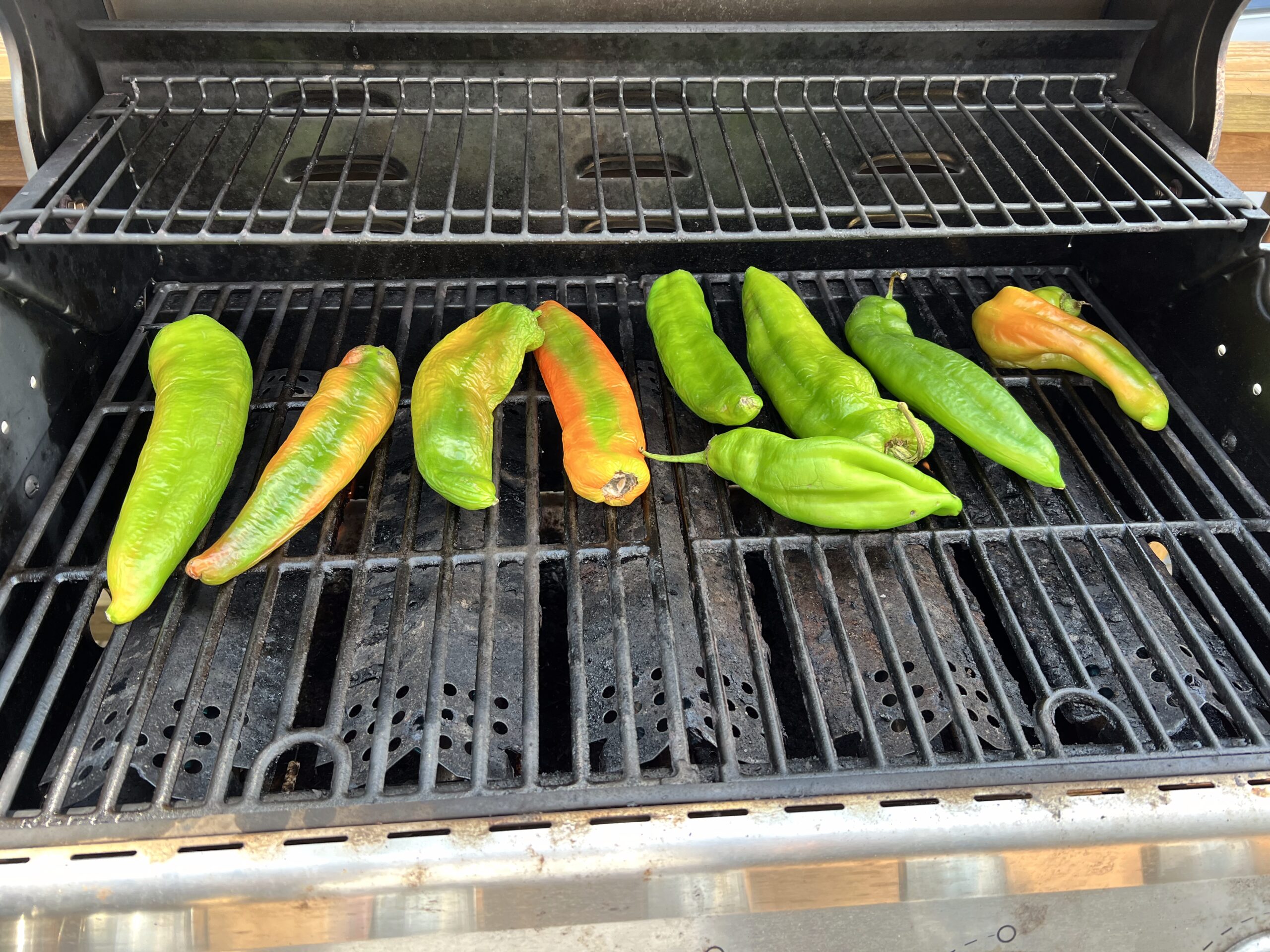
After roasting, home cooks usually place chiles in a covered container, plastic bag, or wrapped towel to steam. This step is crucial, as the trapped heat loosens the skins and makes peeling easier. Peeling is typically done by hand, often under a thin stream of water to remove stubborn bits of charred skin. Seeds can be left in for extra heat or removed for a milder result, depending on personal preference. Yeah, it’s kind of a pain but worth the effort.
Can I freeze the chiles?
Preserving green chile at home mirrors industrial methods but on a smaller scale. Freezing is the most common option: peeled chiles are left whole or chopped, packed into freezer bags, and labeled for later use. Some cooks freeze chiles flat for easy stacking, while others portion them for specific recipes. Canning is another traditional method, though it requires careful attention to food safety. Drying, especially for red chile, is less common for green but still practiced in some households.
From massive roasting drums to backyard grills, green chile processing in New Mexico bridges industry and home cooking. No matter the scale, the goal remains the same: capture the flavor of harvest season and make it last just a little longer.